

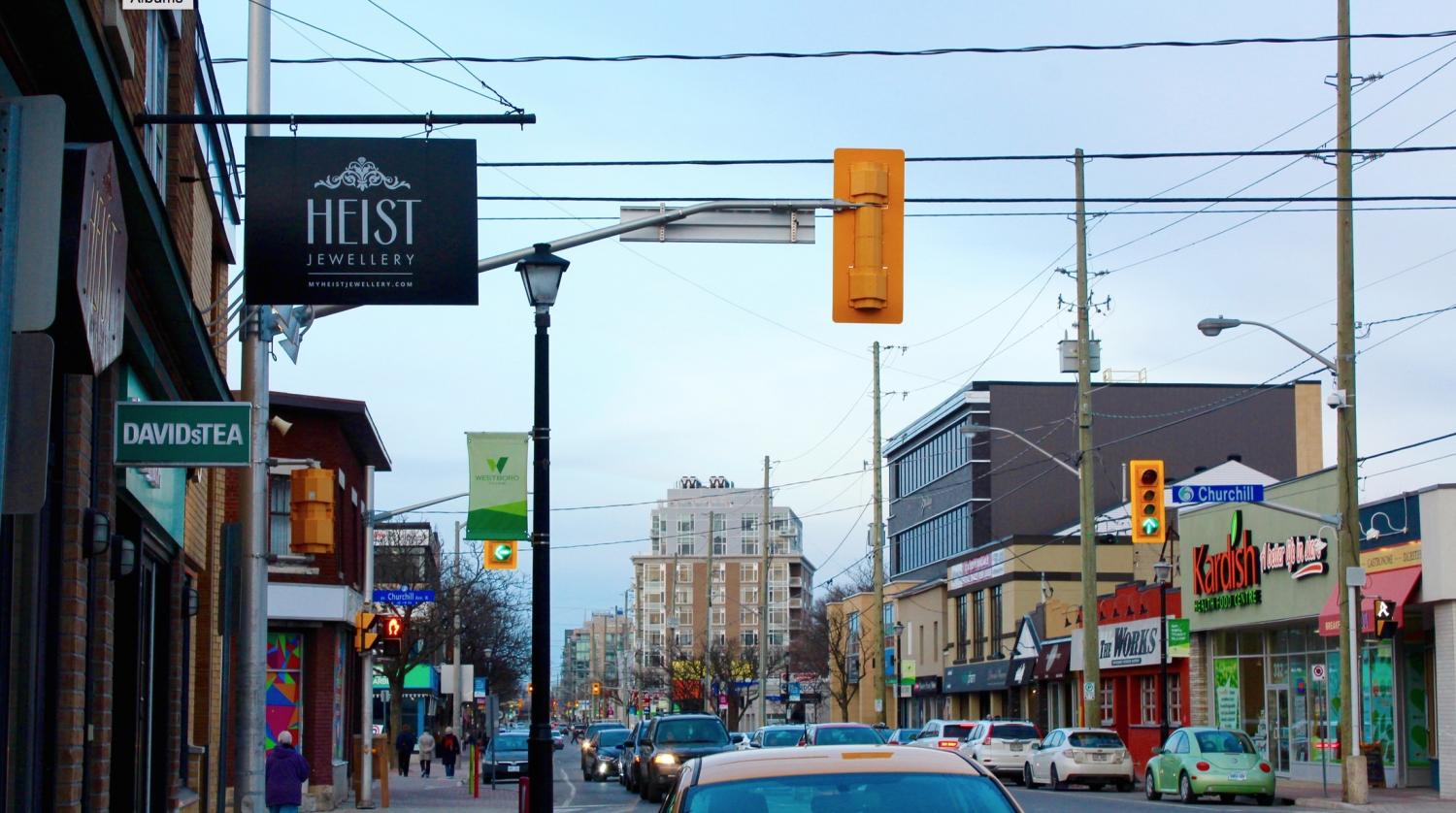
Moving to Westboro or Hintonburg in Ottawa: A Local's Guide
Westboro and Hintonburg are consistently among the most in-demand addresses in Ottawa, and the demand isn't going anywhere. Walkable streets, strong transit connections, a mix of century homes and new infill builds, and some of the best independent food and coffee in the city — both neighbourhoods draw people who want inner-city living without the downtown high-rise experience.
If you're planning on moving to Westboro Ottawa or landing in Hintonburg, the logistics are meaningfully different from a suburban Ottawa move. Tight streets, older homes, parking restrictions, and heritage building quirks all need to be accounted for before the truck shows up. This guide covers everything you need to know.
Why Westboro and Hintonburg Are Ottawa's Most In-Demand Inner-City Neighbourhoods
Both neighbourhoods sit along Ottawa's western inner city, within easy reach of the Confederation Line and the Queensway. They've maintained high demand for years not because of marketing but because the day-to-day quality of life is genuinely strong: you can walk to groceries, cycle to a park, and be downtown in 10 minutes on the LRT.
The Difference Between the Two (and Why It Matters for Your Move)
Westboro and Hintonburg are often mentioned in the same breath, but they have their own distinct characters — and different practical realities for movers.
Westboro runs roughly from Island Park Drive in the east to the Transitway in the west, with Richmond Road as its central commercial spine. It's known for outdoor retailers (MEC, Bushtukah, Fresh Air Experience), upscale cafés, and a strong mix of young families and professionals. The streets here are generally a bit wider than Hintonburg, and there's more surface parking available in the commercial core.
Hintonburg sits just east of Westboro, with Wellington Street West as its main drag. It has a more eclectic, artsy character — independent studios, vintage shops, and specialty food businesses alongside long-time residents in brick rowhouses and low-rise rentals. Streets in Hintonburg tend to be narrower, parking is tighter, and many properties have older building stock going back to the early 1900s.
This distinction matters because the two neighbourhoods present different challenges on move day. In Hintonburg, plan your truck parking earlier and assume tighter access. In Westboro, the bigger concern is often the volume of foot traffic on Richmond Road and the condo-specific logistics of newer buildings near Westboro Station.
Who Moves Here — Demographics and Lifestyle
The typical person moving into Westboro or Hintonburg is a young professional, a couple, or a growing family who wants city living on a human scale. A lot of people making the move are coming from downtown Ottawa condos or apartments and want a house with a yard without leaving the inner city. Others are coming from suburban Ottawa looking for walkability.
Both neighbourhoods also draw a significant number of federal public servants and tech workers — Tunney's Pasture federal campus is right at the eastern edge of Hintonburg, and the LRT makes the rest of downtown very accessible.
Housing Types in Westboro and Hintonburg
What you're moving into will shape the entire logistics of your move. The housing mix in these two neighbourhoods is more varied than it might look from the street.
Semi-Detached and Detached Homes on Quiet Streets
The most common housing type in both neighbourhoods is the semi-detached or detached home, most of it built between the 1920s and 1960s. These homes sit on narrow lots — 25 to 33 feet is typical — with small front yards and often a rear lane for access. The back lane is worth knowing about: in many properties on streets like Tweedsmuir Avenue, Whitby Avenue, and Fairbairn Street, movers can use back-lane access to reduce the walking distance from the truck to the home.
Doorways in homes of this era are narrower than modern builds, staircases are steeper, and the layout between rooms is often tighter. Measure your largest pieces before move day.
Low-Rise Condos and Conversions
Westboro in particular has seen steady condo development over the past 15 years, concentrated along Richmond Road and around Westboro Station. If you're moving into a low-rise condo building, check with building management well in advance about their move-in protocol: most require you to book a time window, use the service elevator (not the main lobby elevator), and sometimes use a specific entrance.
For a full breakdown of condo-specific moving logistics, including elevator bookings and loading dock access, see our guide on moving into a high-rise condo in Ottawa.
New Infill Builds on Narrow Lots (What Movers Need to Know)
Infill construction has added a third housing type to many streets in Westboro and Hintonburg: the skinny three-storey townhome or narrow detached home squeezed onto an infill lot. These properties often have very little space between the building and its neighbours — sometimes as little as two or three feet — which affects how large items are carried from the truck to the front door.
If you're moving into an infill home, tell your movers the specific access situation before booking. The difference between a clear path to the front door and a narrow alley approach can affect how long the move takes and what equipment the crew brings.
Moving Logistics in Westboro and Hintonburg
Street Access, Parking Restrictions, and Parking Permits
This is the section to read carefully. On-street parking in both Westboro and Hintonburg operates under restrictions that vary by hour, day, and season. Most residential streets have peak-hour restrictions that prohibit parking from 7–9 a.m. and 4–6 p.m. on weekdays. From November 15 to April 1, overnight parking is prohibited across most of Ottawa, which includes these neighbourhoods.
If you need to park a moving truck on the street in front of your home, you'll need a temporary no-parking sign permit from the City of Ottawa. These permits must be applied for at least 5–7 business days before your move date and cost approximately $36. You apply through the City's website or by calling 3-1-1. Your moving company will need the permit details — specifically the block face and time window — to plan their approach.
Parking a moving truck on Richmond Road or Wellington Street West is generally not practical. Both roads have bike lanes, transit stops, and consistent traffic. Always plan to use a side street for the truck and carry items to the front door from there.
Older Homes with Narrow Doorways and Steep Stairs
Homes built in the early 20th century were built to different standards than what we expect today. Interior doorways in homes from this era are commonly 28 to 30 inches wide rather than the 32 to 36 inches in newer builds. Staircases are steeper, with smaller landings at the top. If you're moving a large sectional sofa, king-size bed frame, or tall wardrobe, measure the item before move day and compare those measurements to your doorways and staircase dimensions.
Let your moving crew know in advance about any tight spots. A professional crew will walk the property on arrival before loading anything, but giving them a heads-up about a particularly narrow staircase or a doorway with a low header saves time and prevents damage.
LRT Proximity and Foot Traffic on Richmond Road and Wellington Street West
Westboro Station and Tunney's Pasture Station are both on the Confederation Line (O-Train Line 1), which makes these neighbourhoods excellent for transit. But it also means elevated foot traffic along the main roads during morning and evening rush hours, particularly on weekdays.
If your move requires truck access near Richmond Road or Wellington Street West, schedule your start time for mid-morning — around 9:30 or 10:00 a.m. — to clear the morning commute. The same logic applies in the late afternoon: a move that runs until 5 p.m. on a weekday will involve navigating around transit riders and cyclists on the main corridors.
This is quite different from the experience of moving in Ottawa's west-end suburbs. In places like Kanata, Barrhaven, and Orléans, wide residential streets and generous driveways make truck access simple. For more on that comparison, see our guide on moving to Kanata, Barrhaven, and Orléans.
What to Know About Moving Into Heritage and Older Homes
Character Home Challenges (Low Ceilings, Tight Corners, Older Flooring)
Moving into a pre-war home — and there are many in both Westboro and Hintonburg — comes with a specific set of logistical considerations. Ceiling heights in homes from this period are often around 8 feet rather than the 9 or 9.5 feet common in newer builds. This affects how tall furniture, armoires, and upright pianos are carried and positioned. In rooms with plaster walls and tight corners, experienced movers use corner guards to protect the walls as furniture is rotated through doorways.
Basements in century homes are often finished only partially, with low ceilings and stone or poured concrete walls. If anything is going into the basement — a wine fridge, a chest freezer, a deep shelving unit — measure the basement stair opening and ceiling height before assuming it will fit.
Protecting Hardwood Floors and Vintage Features During the Move
Original hardwood floors in older Westboro and Hintonburg homes are often red oak or pine, and they're irreplaceable. A moving crew that doesn't protect them during a long move-in can leave scratches and scuffs that take significant refinishing work to repair.
Ask your moving company specifically whether they include floor runners and furniture sliders in their standard kit. Reputable Ottawa movers do. For a full overview of how professional crews prevent damage to floors, doors, and trim, our guide on preventing property damage during a move walks through the practical steps in detail.
Amenities, Schools, and Daily Life
Groceries, Coffee, and Local Shops (Farm Boy, Independent, Stella Luna)
Daily errands are genuinely walkable from most addresses in Westboro and Hintonburg. Westboro has a Farm Boy on Richmond Road and an Independent Grocer a short drive away, plus a cluster of specialty food shops, a LCBO, and several pharmacies along the main commercial strip.
Hintonburg's grocery situation is more modest — there are smaller corner stores and specialty shops along Wellington Street West, but the main grocery run typically means heading to the Farm Boy in Westboro or to one of the stores along Carling Avenue heading east.
For coffee and independent food, both neighbourhoods are well-stocked. Hintonburg in particular has become a destination for café culture: Bridgehead has a location on Wellington West, and several newer independent cafés have opened in recent years. Westboro has its own café scene along Richmond Road, alongside outdoor retailers and a yoga studio on almost every block. Stella Luna Gelato on Richmond Road is a local institution worth knowing about.
Schools in Westboro and Hintonburg
Families moving to Westboro typically fall into the catchment for Edinburgh Public School or Devonshire Community Public School on the Ottawa-Carleton District School Board (OCDSB). French Immersion programming is available at Devonshire and at several nearby schools accessible via school bus or transit. On the Ottawa Catholic School Board (OCSB) side, St. George Catholic School serves the Westboro area.
Hintonburg families similarly draw from OCDSB and OCSB elementary schools, with several options accessible along the Fisher Avenue and Carling Avenue corridors. Secondary school options include both public (Nepean High School and Lisgar Collegiate for those who qualify) and Catholic (St. Patrick High School).
School catchment boundaries do shift periodically, so confirm your address on the current OCDSB or OCSB boundary maps when you're planning a move.
Transit: OC Transpo and the Confederation Line
Both Westboro and Hintonburg sit within close range of the Confederation Line. Westboro Station is on the O-Train Line 1 and connects directly to downtown Ottawa (Parliament Station is four stops east), reaching Rideau Centre in under 10 minutes. Tunney's Pasture Station is at the eastern edge of Hintonburg, serving both Line 1 and as a major surface bus hub.
For surface transit, the 85 bus runs along Richmond Road through Westboro and is the primary route for residents not directly on the LRT. In Hintonburg, Wellington Street West is served by the 61 and several crosstown routes connecting to the Transitway. For day-to-day transit use, both neighbourhoods rank among the best-connected residential areas in Ottawa outside of the downtown core.
Tips for Your Move Day in Westboro or Hintonburg
Book Parking in Advance (City of Ottawa Temporary Sign Permits)
This is the single most important logistical step for any inner-city Ottawa move. Apply for a temporary no-parking sign permit through the City of Ottawa's online service portal, or by calling 3-1-1. Do this at least one week before your move date.
When you apply, you specify the block face (the section of street in front of your address) and the time window. Book it for the full day if you're unsure how long the move will take — extending a permit on the day is not possible. Once approved, give the permit details to your moving company so they know exactly where to stage the truck.
Without a permit, your crew may be forced to park on the next block, which adds distance and time to every trip. In a long move into a home with multiple flights of stairs, those extra steps add up quickly.
For a full hour-by-hour breakdown of what to expect on move day, our moving day survival guide for Ottawa is worth reading before your date.
Communicate Access Details With Your Moving Crew
Before the truck shows up, make sure your moving company knows:
- Whether your property has back-lane access and whether it's wide enough for a truck
- Any specific tight doorways, low headers, or narrow staircases you're aware of
- Whether the new home has a parking pad or driveway, or whether the truck will need the street permit
- Whether any rooms have original hardwood floors that need runner protection
- Whether any furniture pieces are unusually large relative to the doorways
A 15-minute conversation before move day is worth an hour saved on the day itself.
Ready to book? Get a free moving quote from UpMove — we've moved hundreds of households in Westboro and Hintonburg and know both neighbourhoods well.
Frequently Asked Questions
Do I need a parking permit to move to Westboro or Hintonburg?
Yes, in almost every case. Residential streets in both neighbourhoods have peak-hour restrictions and overnight parking bans in winter. A large moving truck without a temporary no-parking sign permit can receive a city bylaw ticket or be asked to relocate. Apply through the City of Ottawa's website or 3-1-1 at least 5–7 business days before your move date.
How long does a typical move take in Westboro or Hintonburg?
For a two-bedroom home, allow 4–6 hours. Homes with tight staircases, large furniture, or back-lane access rather than front-door access can push that toward 7–8 hours. Your movers should review the property specifics with you before giving a firm time estimate — any company that quotes a flat time without asking about staircase configuration or access points isn't giving you a reliable number.
Is it harder to move into an older home in these neighbourhoods?
More involved, yes — but very manageable with the right crew. Century homes in Westboro and Hintonburg typically have narrower doorways (28–30 inches rather than 32–36 inches), steeper staircases, and lower ceiling heights than newer builds. The key is communicating the property specifics with your movers before booking so they bring the right equipment and allocate enough time.
Can I move on a weekday to avoid the weekend rush?
Weekday moves in Westboro and Hintonburg are often a practical choice. Foot traffic on Richmond Road and Wellington Street West is lower mid-morning on weekdays, parking enforcement is more predictable, and moving company availability may be better than on high-demand Saturdays. If you can arrange your move for a Tuesday or Wednesday mid-morning start, you're likely to have a smoother experience than a Saturday afternoon.
If you're weighing inner-city Ottawa against the west end, take a look at our guide on moving to Nepean Ottawa for a sense of what a suburban Ottawa move looks and feels like by comparison.
When you're ready to move, our local moving services in Ottawa cover Westboro, Hintonburg, and every corner of the city. Book your date at upmove.ca/book.


