

How to Move a Piano Safely in Ottawa
A piano is not just a piece of furniture; it is a delicate instrument with thousands of moving parts, often weighing between 500 and 1,200 pounds. Trying to move one without professional help is a recipe for personal injury and catastrophic damage. Learning how to move a piano safely in Ottawa requires specific equipment, technique, and planning. Whether you have a cherished family upright or a concert grand, this guide explains why this task is best left to the experts.
The Risk Factor: Weight and Balance
Unlike a sofa or a dresser, a piano is top-heavy and incredibly dense. An upright piano carries most of its weight in the back (the harp), making it prone to tipping if not balanced correctly. Grand pianos are even more complex, requiring partial disassembly (removing legs and pedals) before they can be moved. One slip on a staircase in a narrow Ottawa townhome can result in crushed walls, broken toes, or a cracked soundboard.
Necessary Equipment
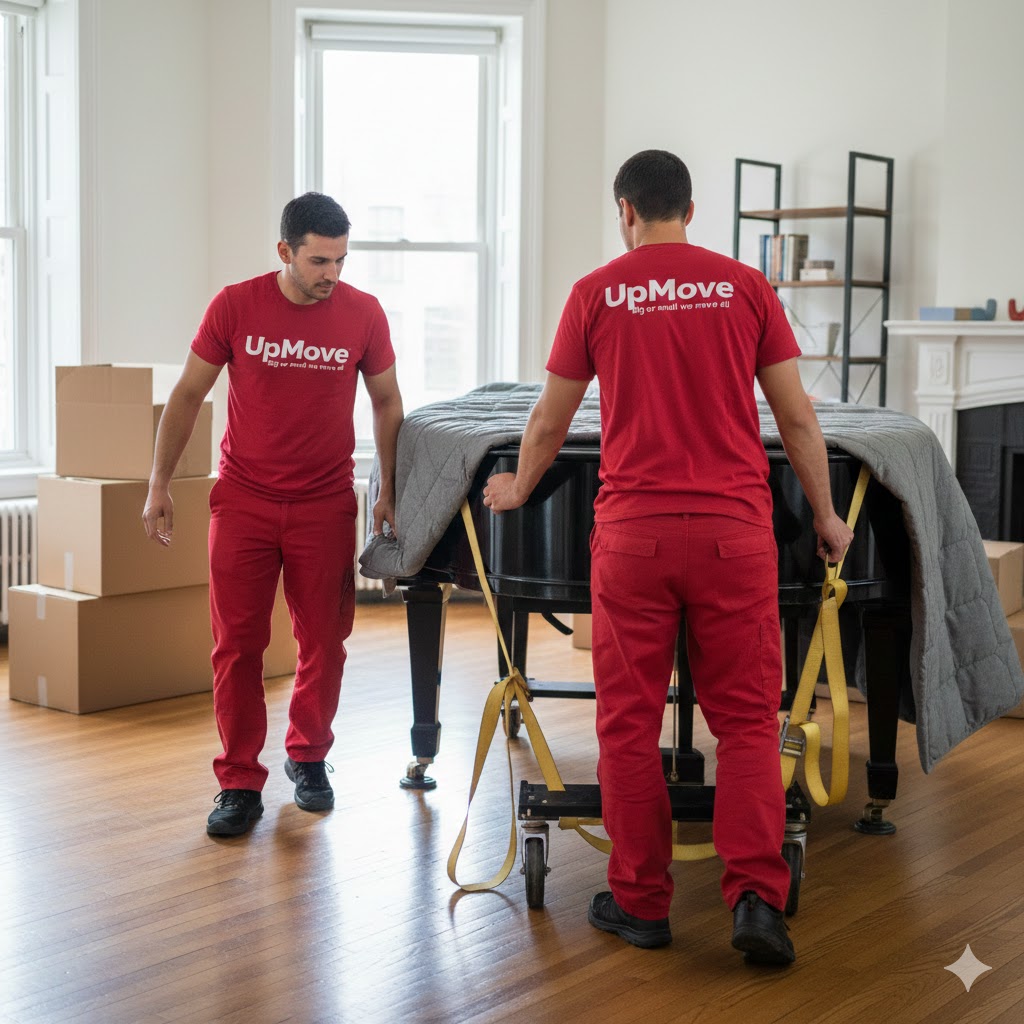
Professional piano movers don't just use muscle; they use physics. Essential gear includes a heavy-duty "piano skid" or "piano board" for grand pianos, strapped securely to the instrument. Multi-wheel dollies with rubber casters protect hardwood floors. Heavy-duty moving straps and "hump straps" allow movers to lift using leverage rather than raw back strength. Attempting this with a standard two-wheel hand truck is dangerous and ineffective.
The Impact of Humidity and Temperature
Pianos are made of wood, felt, and metal—materials highly sensitive to environmental changes. Ottawa's climate, with its humid summers and dry, freezing winters, poses a threat during a move. sudden shifts in temperature can cause the soundboard to crack or the tuning pins to slip. Professionals will keep the piano covered in thick, padded blankets not just for impact protection, but to provide a layer of thermal insulation during the transition from house to truck.
Navigating Stairs and Tight Turns
Ottawa's architecture often features narrow vestibules, turning staircases, and tight corners, especially in neighborhoods like The Glebe or Old Ottawa South. "Keyboarding" a piano—tilting it on its end to maneuver around a tight corner—is a specialized skill that requires precision teamwork. If your move involves a flight of stairs, the complexity (and risk) triples. In some extreme cases, a crane may be required to hoist the instrument through a large window or balcony door.
Tuning After the Move
No matter how smooth the move is, your piano will go out of tune. The vibration of the truck and the change in humidity will affect the string tension. It is standard practice to wait 2–3 weeks after the move for the piano to "acclimate" to its new environment before hiring a tuner. Tuning it immediately is often a waste of money as the wood is still settling.
Why This Matters for Ottawa and Gatineau Residents
Local knowledge is critical when moving heavy instruments. Many older Ottawa homes have "heritage" features like narrow door frames or steep porch steps that modern pianos barely clear. Furthermore, if you are moving into a condo building in downtown Ottawa, you must confirm if the freight elevator has the weight capacity and physical dimensions to accommodate a grand piano. unexpected stairs—like the three steps often found in "split-level" suburban homes in Nepean—must be accounted for in the quote to ensure the crew brings the right ramp.
Pianos are often just one part of a complex household inventory. If you have other delicate valuables, refer to our guide on moving antiques and fragile items. For older adults who may be downsizing from a family home with a piano, our senior moving services guide offers tailored advice. Finally, ensuring the rest of your home is packed correctly will leave plenty of room for the piano crew to work—see how to pack your home like a professional.
FAQ
Q: How much does it cost to move a piano in Ottawa?
A: Local piano moves typically range from $300 to $600 for an upright, and $600 to over $1,000 for a grand piano, depending on stairs and distance.
Q: Can regular movers move a piano?
A: heavy-duty movers can move uprights, but for grand pianos or difficult access, specialized piano movers are highly recommended. Always ask if they have specific piano moving experience.
Q: Do I need to remove the keys?
A: No. The key cover (fallboard) should be locked or taped shut (with non-residue tape) to prevent it from opening. The keys themselves stay in place.
Q: Will moving a piano damage my hardwood floors?
A: Not if done correctly. Professionals use plywood sheets or neoprene runners to protect flooring from the weight of the dolly wheels.
Q: Is piano moving covered by insurance?
A: Reputable movers will have cargo insurance. However, always check the limit. Some policies have exclusions for "internal damage" (tuning/action) versus external physical damage.
Moving a piano is a precision operation that balances brute strength with delicate care. By understanding how to move a piano safely, you can respect the instrument's value and history. Don't risk your back or your piano's soundboard to save a few dollars. Contact UpMove to find verified specialists in Ottawa who treat every piano as if it were their own.


